

To quote Jack Nicolson ‘What if this is as good as it gets?’
I have accepted the noticeable deterioration in the elasticity of my skin and the little wrinkles and lines forming, the drift south.
To quote Jack Nicolson ‘What if this is as good as it gets?’
I have accepted the noticeable deterioration in the elasticity of my skin and the little wrinkles and lines forming, the drift south.
A not so cautious return from injury.
It’s an age old story.You get injured. It’s a bad one, crutches are involved. Painkillers are involved. Picture a running diva lolling with a ‘blanky’ and a pile of cushions. There are weeks (four) of enforced inactivity. Picture diva impersonating a cat on a hot tin roof. Finally, you get the all clear to ease back into training, but there is a small problem. It is only seven weeks until your next race, a huge kick-ass 100k with ascent equal to climbing Ben Nevis five times.
My recent participation in the Devil ‘O the Highlands footrace had an almighty sting in the tail: shin splints!
“You don’t need cream, you don’t need this and that. The only way to be beautiful is to accept yourself,”
The chimp is dusting off his little red trousers ready for the Great Glen Ultra where he will undoubtedly put in an appearance or two, and may well run amok again flinging pine cones at us in the woods on the climb out of Drumnadrochit.
The chimp is running around, throwing stuff and screaming.
Me: Chimp, you need to calm it down a bit, how about a foam banana?
The foam banana is flung straight back at me.
The chimp: REALLY? Do you really think you can fob me off with that?
Me: OK let’s talk. What’s the problem?
It turns out that nature built me a bit wonky. For as long as I have been a runner I have had issues with my left leg. It is always tight and always needs more massage than the right, and has always seemed to be either the root of or involved in any injuries that I have had to contend. I am also an over-pronator and it is worse on the left.
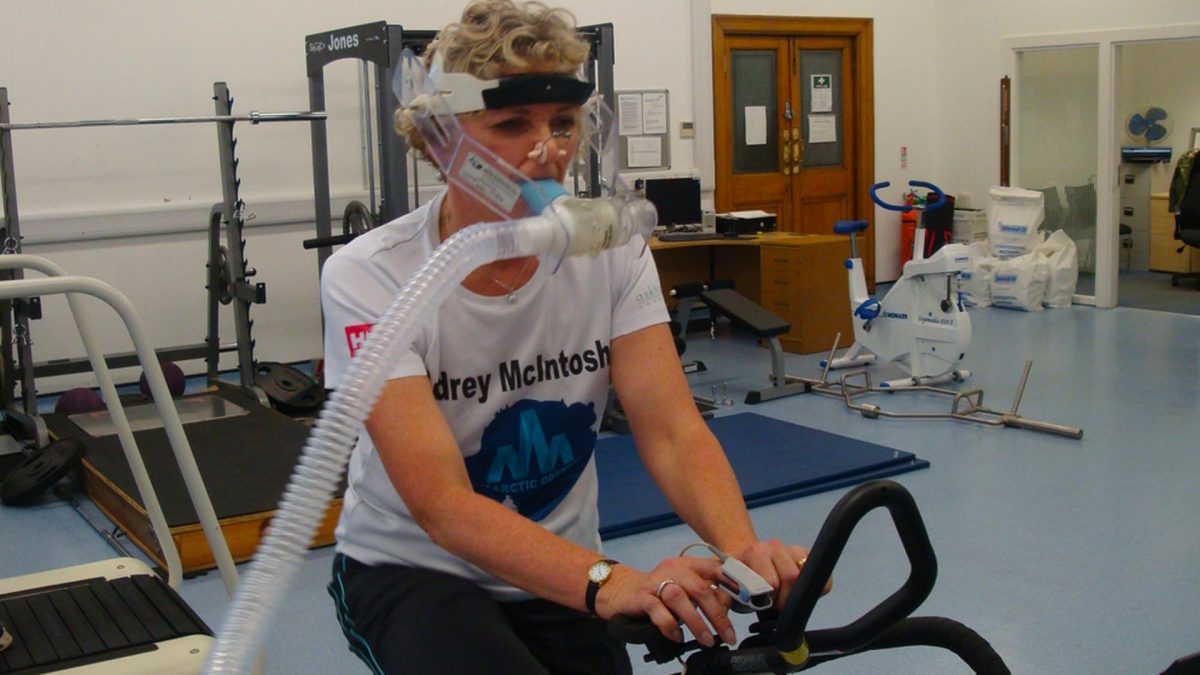
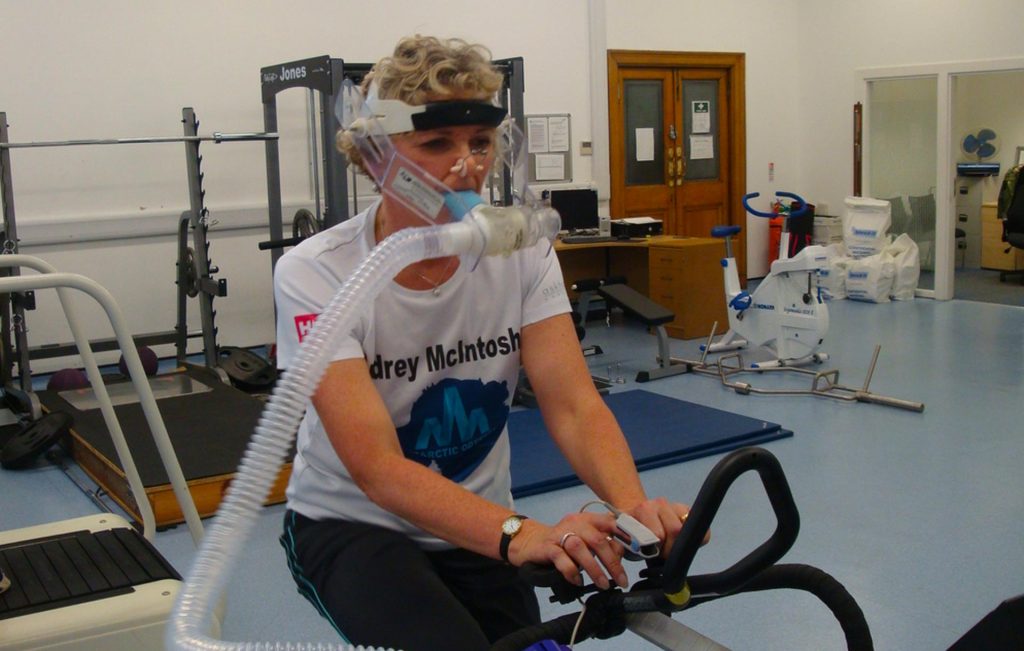
A new aspect has come into my life as a runner: science. Heart rate, VO2 max and lactate threshold are all things that I was aware of but never really thought applied to me, at the level I perform. Now that I am working with Nairn at the Life Sciences Department at Glasgow University they have taken on a greater significance for me. It is through these tests that Nairn is able to measure my fitness and any improvements (or decline). They provide the basis for training advice and recommendations for race pace.
Since I will be running at high altitude in the Volcano Marathon, and have never been at altitude, let alone run at altitude, I jumped at the opportunity to do some hypoxic training. It is not about performance or improving performance, it is simply for me to get a feel for how my body will react, and set my expectations based on how I respond.
There is however a serious side to this. It would be fair to say that the majority of runners experience injury at some point in their running life, and I think that all runners, especially long-distance runners expect to be injured at some point.